 Join WhatsApp

Sabut Masoor Dal, also known as Whole Brown Lentils, is a simple yet deeply satisfying Indian dal recipe. This is the kind of dal you often taste at roadside dhabas in India, slightly dry, well-cooked, full of masala flavour, and finished with a rich ghee tadka. It is wholesome, protein-rich, and perfect for everyday meals.
This recipe does not need any fancy ingredients. Everything used here is easily available in an Indian kitchen. The method is straightforward, and the taste is comforting, earthy, and delicious.
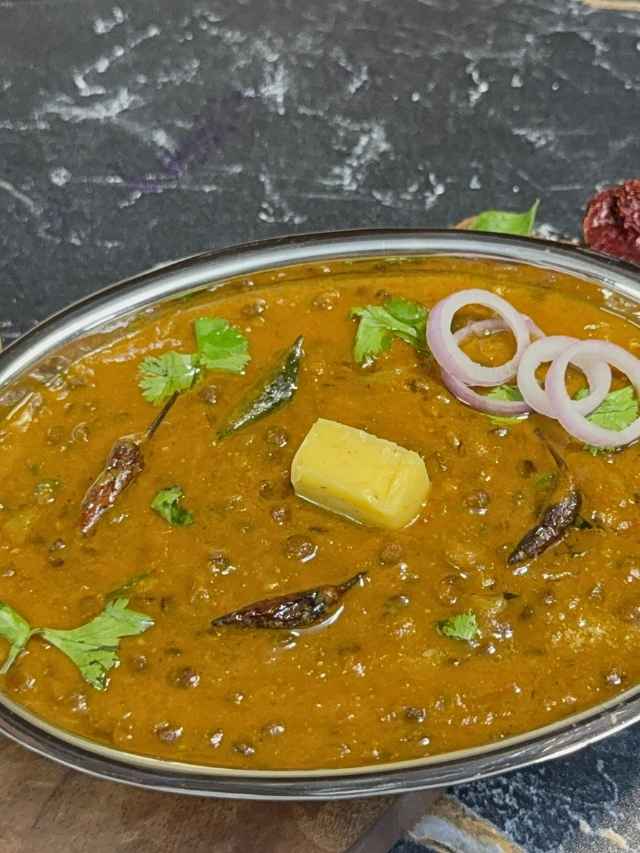
This dal pairs beautifully with roti, chapati, naan, or even plain rice. If you love dhaba-style food that feels homely and filling, you will truly enjoy this recipe.
What is Sabut Masoor Dal?
Sabut Masoor Dal is also known as whole brown lentils. Unlike red masoor dal (which cooks very fast), whole masoor dal needs soaking and pressure cooking. It has a slightly nutty taste and holds its shape well after cooking.
This dal is:
- High in protein
- Rich in fibre
- Naturally vegan (can be made vegan by skipping ghee)
- Budget-friendly
- Very filling and healthy
When cooked with onions, tomatoes, spices, and finished with a tadka, it becomes a comforting Indian-style lentil dish that tastes even better the next day.
Why You Will Love This Recipe
- Easy and simple method
- Perfect dhaba-style flavor
- No complicated techniques
- Adjustable spice level
- Ideal for lunch or dinner
- Great for meal prep
This recipe is especially good for home cooks who want authentic taste without restaurant-style heaviness.
Sabut Masoor Dal Recipe Step-by-Step (With Photo)
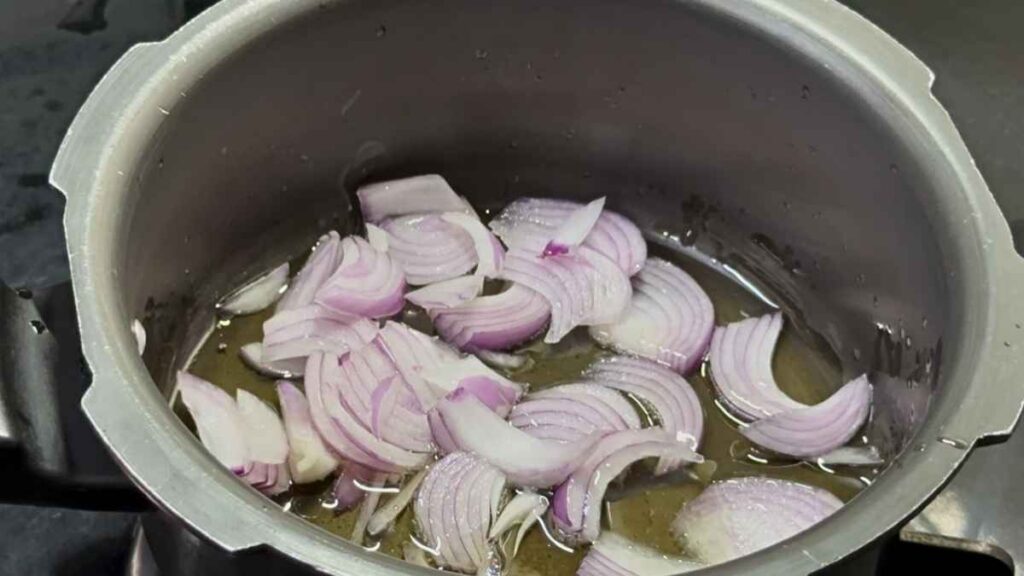
Step 1: Heat Oil and Fry Onions
Place a pressure cooker on medium heat. Add 2 tablespoons of oil and let it heat properly.
Now add 1 sliced onion and fry them until they turn light golden. Do not rush this step. Golden onions give a good base flavour.
Step 2: Add Ginger Garlic Paste
Once the onions are golden, add ¼ teaspoon of ginger garlic paste.
Sauté for a few seconds until the raw smell disappears.
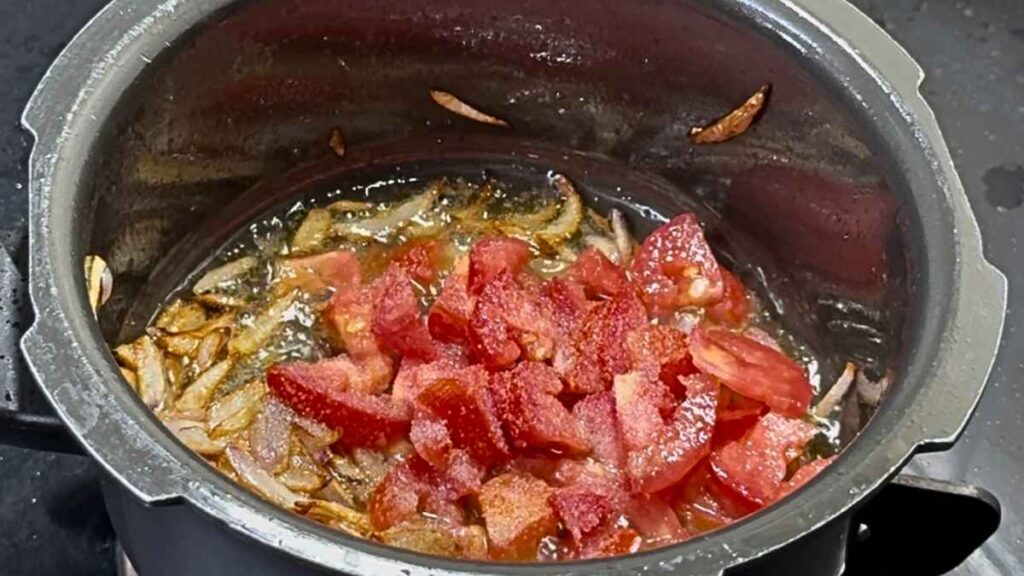
Step 3: Add Tomatoes and Salt
Now add 1 finely chopped tomato and salt to taste.
Mix well and cook until the tomatoes become completely soft and the oil starts separating slightly.
Step 4: Add Soaked Sabut Masoor Dal
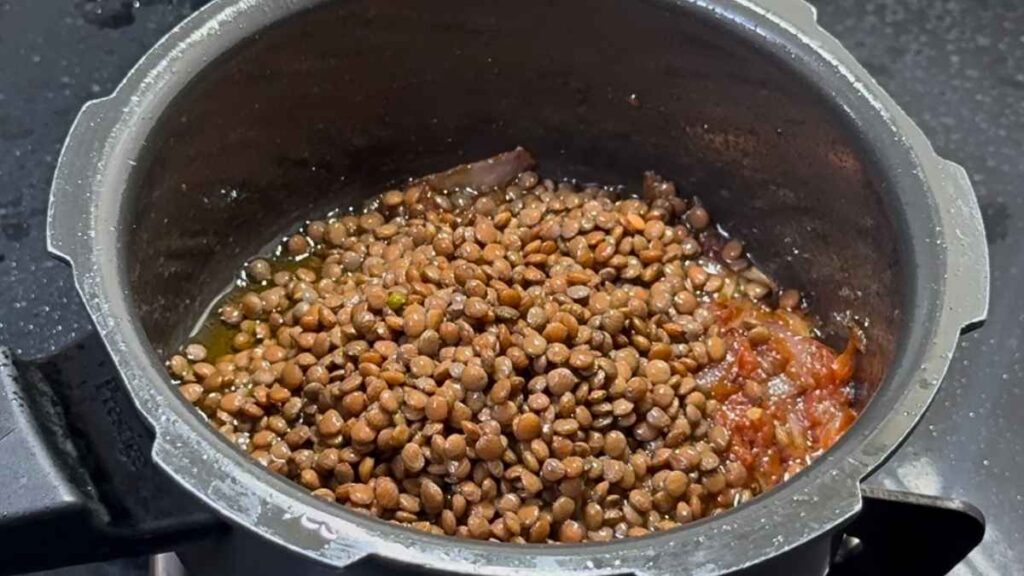
Drain the water from the soaked dal and add it to the cooker.
Add one green chilli along with it.
Mix and fry for a few minutes so that excess moisture dries and the dal lightly roasts with oil and masala.
This step improves the overall taste of the dal.
Step 5: Add Dry Spices
Now add all the dry spices:
- ¼ teaspoon turmeric powder
- 1 teaspoon Kashmiri red chilli powder
- ¼ teaspoon red chilli powder
- 1 teaspoon cumin powder
- ½ teaspoon coriander powder
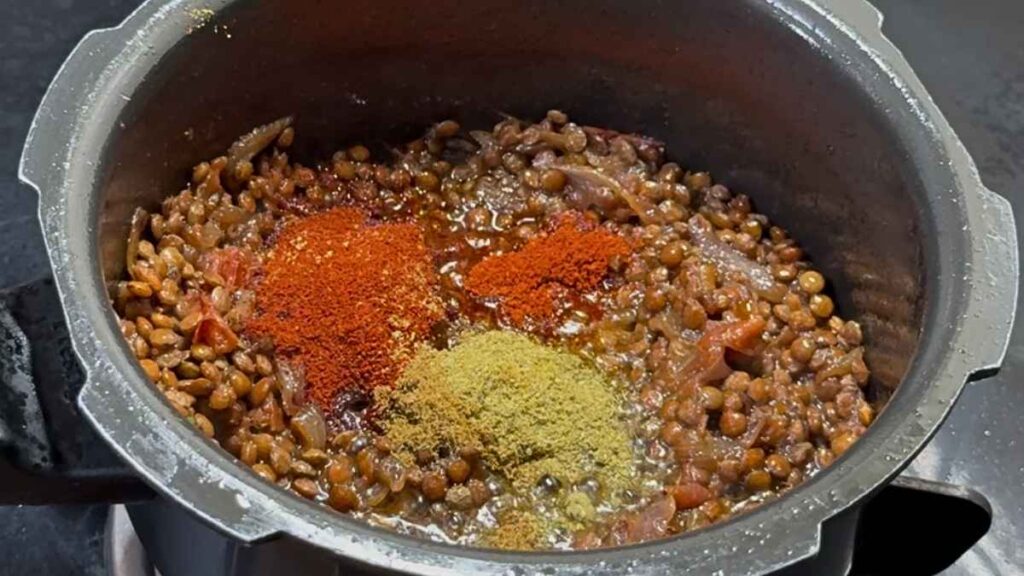
Mix everything well and roast the masala on low to medium heat until the spices lose their raw smell.
Step 6: Add Water and Optional Masala
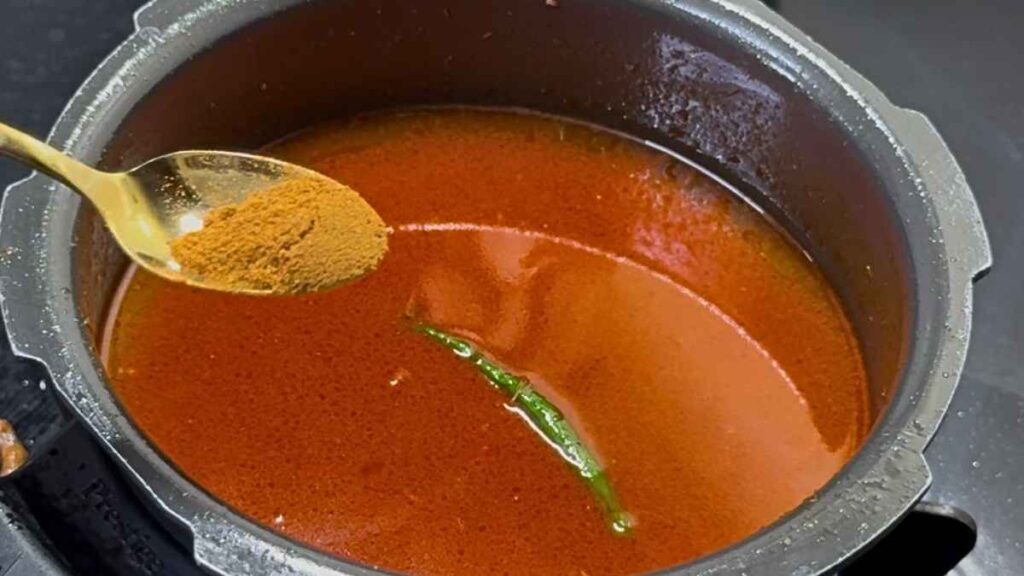
Add 1 and 1⁄2 cups of water and mix properly.
Now add ½ teaspoon chole masala or pav bhaji masala. This step is optional but highly recommended if you want a strong dhaba-style flavour.
Step 7: Pressure Cook
Close the lid of the pressure cooker.
Cook on low to medium flame for 4 to 5 whistles.
After cooking, let the pressure release naturally.
Step 8: Mix and Finish Dal
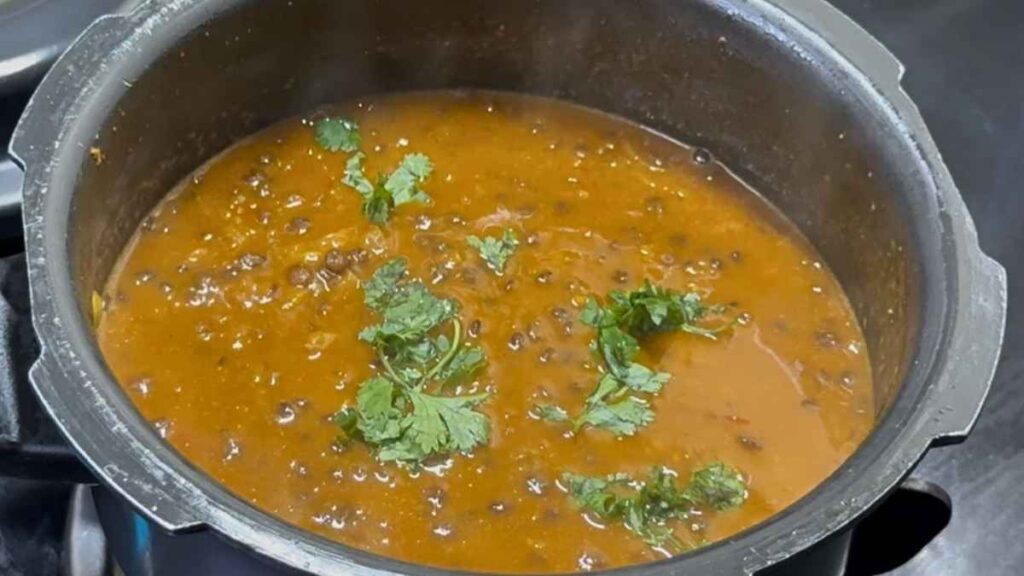
Open the cooker and gently mix the dal.
Check the consistency. This dal is slightly dry, not watery.
Add fresh coriander leaves and mix again.
Dhaba Style Ghee Tadka (Final Touch)
This step takes the dal to the next level.
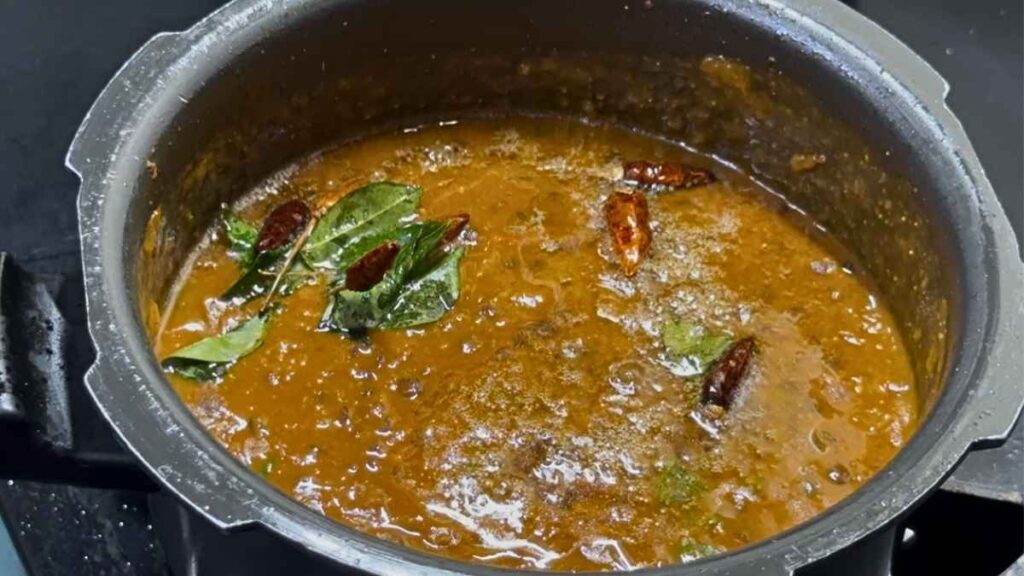
Heat a small frying pan.
Add 2 to 3 tablespoons of ghee.
Once hot, add curry leaves and dry red chillies.
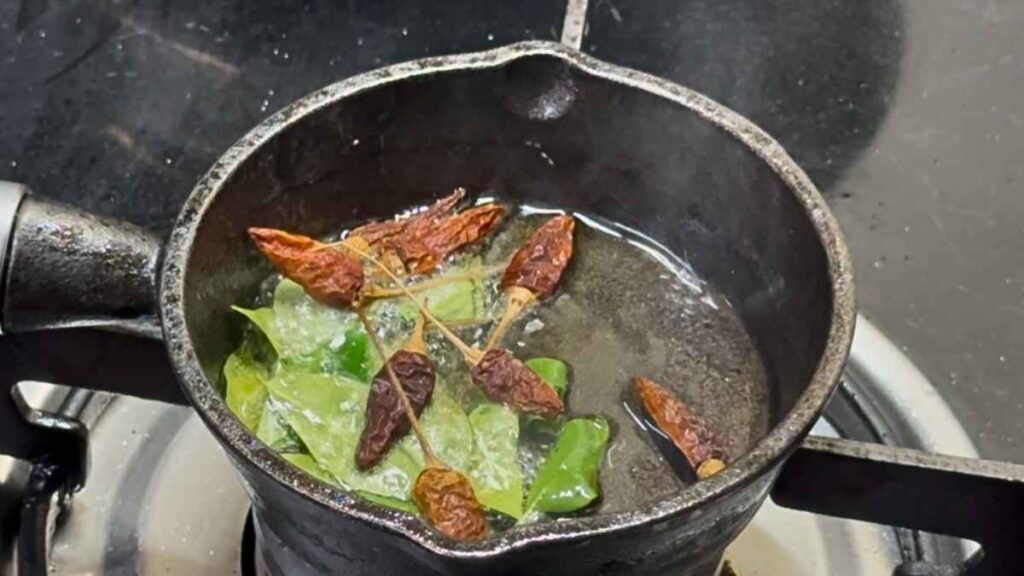
Fry for a few seconds until aromatic.
Immediately pour this hot tadka over the dal and mix gently.
Final Taste Check and Garnish
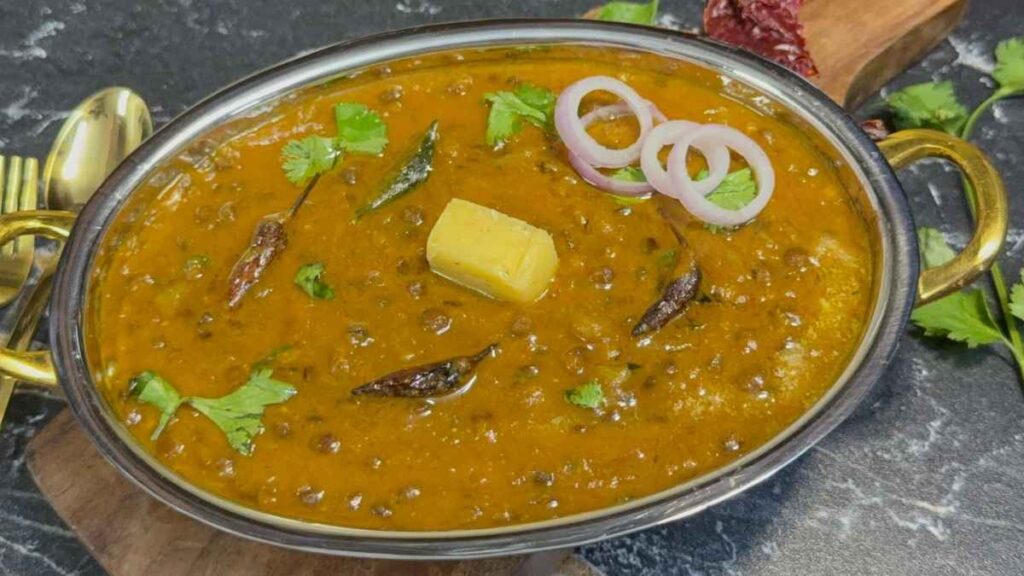
Taste the dal and adjust salt if needed.
Transfer to a serving bowl.
Garnish with:
- Onion
- Fresh coriander
- Burter (optional)
Serving Suggestions
Serve this Dhaba Style Sabut Masoor Dal hot with:
- Roti
- Chapati
- Naan
- Plain rice or jeera rice
- Add sliced onions, lemon wedges, and green chilli on the side for a complete meal.
Tips for Best Taste
- Always soak sabut masoor dal for at least 30 minutes
- Do not overcook; the dal should hold its shape
- Ghee tadka gives an authentic dhaba flavour
- Kashmiri red chilli powder adds colour without too much heat
- Optional masala enhances the depth of flavour
Storage and Reheating
Store leftover dal in an airtight container in the refrigerator.
Stays fresh for up to 2 days.
Reheat on low flame with a little water.
Health Benefits of Sabut Masoor Dal
- Rich in plant protein
- High in dietary fiber
- Supports digestion
- Keeps you full for longer
- Good for balanced Indian meals
Frequently Asked Questions (FAQ)
# Can I make this dal without a pressure cooker?
Yes, you can cook it in a pot, but it will take more time.
# Is this dal vegan?
Yes, skip ghee tadka and use oil instead.
# Can I make it less spicy?
Reduce red chilli powder as per taste.
# Can I add garlic in tadka?
Yes, sliced garlic tastes great in the tadka.
Dhaba Style Sabut Masoor Dal Recipe | Tadka wali masoor dal
Ingredients
Equipment
Method
- Heat oil in a pressure cooker and fry sliced onions until light golden.
- Add ginger garlic paste and sauté until the raw smell disappears.
- Add chopped tomatoes and salt. Cook until tomatoes turn soft.
- Add soaked sabut masoor dal and green chilli. Fry for a few minutes until moisture dries.
- Add all dry spices and roast the masala well.
- Pour in water and add optional chole or pav bhaji masala. Mix well.
- Close the lid and pressure cook on medium flame for 4–5 whistles.
- Let pressure release naturally. Open lid, mix dal, and add fresh coriander.
- For tadka, heat ghee in a pan, add curry leaves and dry red chillies, and pour over the dal.
- Mix gently, adjust salt, and serve hot.
- Serving Suggestions
- Serve hot with roti, chapati, naan, or plain rice. Add sliced onions and lemon wedges on the side for a dhaba-style meal.
Notes
Read This Also:
This Sabut Masoor Dal recipe is perfect if you want something simple, healthy, and full of traditional Indian flavours. It is ideal for everyday cooking and tastes just like dhaba-style dal made with love.
If you enjoyed this recipe, do try it once at home and pair it with hot rotis. It is comfort food at its best—simple, nourishing, and satisfying.
Happy Cooking